Golo Game Two Terrace Fit: Path Scoring and Median Splits Explained
The Two Terrace Fit game by Golo Game offers a unique browser-based experience driven by probability and path analysis. This independent demo allows players to explore how twelve bounces create thirteen positions, which are then split into blocks to calculate a raw path score. With no player choice involved in the split or median selection, the game relies entirely on its mathematical structure to determine outcomes.

Understanding the Two Terrace Fit Game Mechanics
Path Creation and Bounces
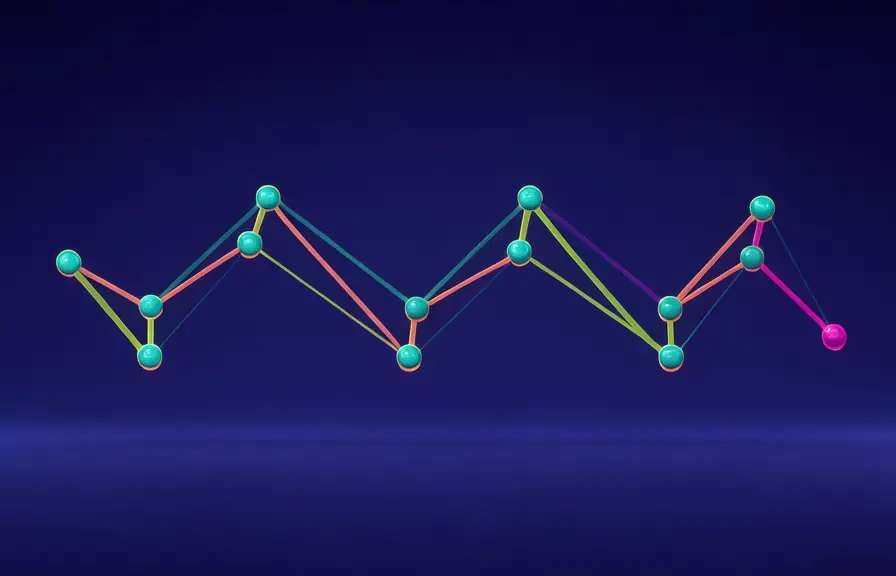
The Two Terrace Fit game begins with the ball at a signed position of 0. The core mechanic involves twelve independent fair bounces, where each bounce shifts the position by either minus 1 or plus 1. This process generates a complete path consisting of thirteen positions, including the origin. Every possible path is equally likely, resulting in exactly 4,096 complete paths that the game evaluates.
Block Splitting and Median Calculation
Once the path is established, the game automatically attempts every possible split of the ordered positions into two nonempty contiguous blocks. Each block is represented by the median of its values. The score is calculated by adding the absolute distances from each position to its respective block’s median. The game selects the smallest total across all splits to determine the raw path score. There is no player choice regarding the split or the median; the score utilizes the entire thirteen-position path, not just the final landing position.
| Component | Detail |
|---|---|
| Bounces | 12 independent fair bounces |
| Positions | 13 total positions including origin |
| Total Paths | 4,096 equally likely outcomes |
| Scoring Basis | Entire path, not just final position |
Understanding these mechanics is essential for grasping how the raw path score is derived before any multiplier or return calculations are applied.

How the Raw Path Score is Calculated
The raw path score is determined by adding the absolute distances from each position to its block’s median. The game tries every possible split and selects the one with the smallest total score.
Median Representation of Blocks
The game automatically tries every split of the ordered positions into two nonempty contiguous blocks. Each block is represented by a median of its values. There is no player choice of split or median. The score uses the entire path, not only its final landing position.
Summing Absolute Distances
- Calculate Distances: For each position in a block, calculate the absolute distance to that block’s median.
- Total the Score: Add these absolute distances together to get the total for that specific split.
- Find the Minimum: The game compares all possible splits and selects the one with the smallest total as the raw path score.
This process ensures that the score reflects the entire thirteen-position path, capturing the variability of the ball's journey rather than just its final landing spot.

Path Examples and Score Variations

Consecutive Right Bounces Example
When a ball undergoes twelve consecutive right bounces, the resulting path generates thirteen signed positions, starting from the origin and ranging sequentially from 0 to 12. The game automatically evaluates every possible split of these ordered positions into two nonempty contiguous blocks. In this specific scenario, splitting after the fifth position creates two distinct blocks: the first containing positions 0 through 5, and the second containing positions 6 through 12. Each block is represented by its median value. For the first block, the median cost is calculated at 9, while the second block yields a median cost of 12. By summing the absolute distances from each position to its respective block median, the raw minimum score for this path is determined to be 21. Notably, the other tied middle split produces the identical total, confirming the consistency of the scoring algorithm for this extreme path configuration.
Alternating Bounces Example
In contrast to the consecutive right bounce pattern, an alternating sequence of right and left bounces creates a fundamentally different path structure. Here, the thirteen positions alternate between 0 and 1. This tight clustering significantly reduces the dispersion of values within any potential split blocks. Consequently, the raw minimum score for this alternating pattern is only 6. It is important to note that this raw score of 6 is not the final paid multiplier. In power 2 mode, for instance, this raw score is raised to that power, resulting in a value of 36 before normalization. Paths ending at the same final location can exhibit different intermediate histories and scores, demonstrating that the payout is driven by the entire path’s geometry rather than just the landing position.
| Path Type | Position Range | Raw Minimum Score | Median Block 1 | Median Block 2 |
|---|---|---|---|---|
| Consecutive Right | 0 to 12 | 21 | 9 | 12 |
| Alternating | 0 and 1 | 6 | 0.5 | 0.5 |
Reward Powers and Gross Return
Choosing Reward Power 1, 2, or 3
Before dropping a ball, players must select one of three reward powers: 1, 2, or 3. This selection is a critical decision that influences how the game calculates potential returns. Each power mode operates with its own distinct mathematical mean, meaning the expected gross return is calculated independently for each choice. The chosen power does not change the physical path of the ball, which remains determined by twelve independent fair left or right bounces. Instead, it changes how the raw path score is processed to determine the final payout value. Players should note that the score uses the entire thirteen-position path, not just the final landing position, so the power selection applies to the comprehensive history of the path.
Calculating the Gross Multiplier
The gross multiplier is derived from a specific formula involving the raw path score and the selected reward power. First, the raw path score is raised to the power of the chosen reward level. This powered score is then multiplied by 0.96. The result is divided by the exact mean of that powered score across all 4,096 possible paths. Each power level has its own calculated mean, ensuring that each mode independently achieves a 96% expected gross return. It is important to understand that this gross return includes the stake. To find the net change, players must subtract the captured stake from the gross return. A positive path score does not necessarily give a net gain. Simulations support the calculation and do not define it. This is neither a win probability nor a promised session result.

Stake Selection and Ball Drop
Selecting Virtual Coin Stakes
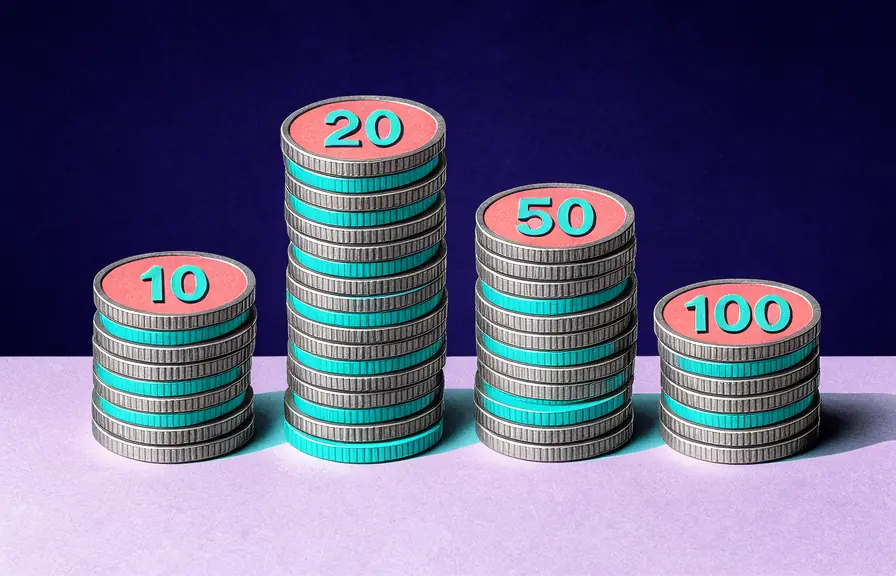
Before initiating gameplay, players must configure their initial parameters by selecting a stake amount and a reward power. The available stake options are 10, 20, 50, or 100 virtual coins. It is important to understand that choosing a specific stake value does not immediately deduct it from your local wallet. The selected stake remains reserved but untouched until you actively decide to begin the round.
- Select your desired stake level from the available options.
- Choose your preferred reward power (1, 2, or 3).
- Ensure no other ball is currently active in the simulation.
Capturing the Stake
The stake is captured only when you press the Drop one ball button. This action locks in the full selected stake for that specific game session. During the active ball phase, your stake, power selection, and restoration settings are locked, preventing any changes until the draw settles. The game supports only one active ball at a time; there is no automatic queue, pause control, or manual bounce choice available. Once the ball is dropped, the sampled path settles automatically after its animation completes. If you reload the page without finishing a draw, the captured stake remains deducted, and the session does not resume automatically. Restoration only resets the balance to 1,000 when no draw is active and the balance falls below that threshold.
| Action | Effect on Stake |
|---|---|
| Select Stake | No deduction |
| Drop Ball | Captures full stake |
| Settlement | Credits winnings |

Balance, Fractional Carry, and Reload
Local Wallet and Balance Management
The game utilizes a local wallet system that initializes with a starting balance of 1,000 virtual coins. This balance is managed independently within the browser environment, meaning there is no external account linkage or permanent storage across different sessions unless specified by the local state. When the current balance drops below 10 virtual coins, players can restore their funds by pressing the restoration button. This action sets the balance exactly to 1,000, rather than adding 1,000 to the existing amount or triggering an automatic refill. Reloading does not create a refund.s the available virtual currency to the standard starting amount for continued play.
Fractional Carry Mechanics
A unique feature of the Two Terrace Fit demo is the fractional carry system, which preserves precision during settlements. When a draw settles, the system credits the whole-coin portion of the stake multiplied by the gross multiplier, plus any prior fractional carry. Any remaining fractional part is saved for later use rather than being discarded. This fractional carry survives settlement, restoration, and reload operations, ensuring that small numerical values are not lost during balance resets. Consequently, a saved zero balance persists only if explicitly set, while any non-zero fractional carry remains active and contributes to future calculations. This mechanic supports accurate long-term simulation of the game's return rates without rounding errors affecting the user's virtual balance.

Game Controls and Limitations
Active Ball Restrictions
When you begin a session in the Two Terrace Fit demo, you must first select a stake amount from the available options of 10, 20, 50, or 100 virtual coins. You also choose one of the three reward powers before initiating the game. Pressing the Drop one ball button captures the full selected stake at that moment. Importantly, the act of choosing a stake does not immediately deduct it from your balance; the deduction occurs only when the ball is dropped. Once the ball is active, the system locks several key settings to ensure the integrity of the current path simulation. Specifically, your selected stake, the chosen reward power, and the restoration function are all locked during the active ball phase. This means you cannot adjust your stake level or switch reward modes until the current simulation settles. Only one ball can be active at any given time, preventing overlapping animations or score calculations. The sampled path settles automatically once its animation concludes, ensuring a clear and unambiguous result for each round.
Absence of Advanced Controls
The Two Terrace Fit demo is designed as a straightforward, automated experience rather than a complex player-driven game. There is no automatic queue for subsequent balls, so you must manually trigger each new drop. The interface does not offer a Stop button to interrupt a running animation, nor does it provide a Cash-out feature to lock in winnings mid-sequence. Players cannot make manual choices regarding individual bounces; the left or right direction is determined by the fair coin toss mechanism described in the rules. Additionally, there is no Pause control available, meaning the animation runs to completion without user intervention. Sound remains available throughout the process, but visual or audio controls are limited to starting the game or reloading the wallet. This design ensures that every path is generated purely by chance, without player influence on the trajectory.
| Feature | Status During Active Ball |
|---|---|
| Stake Selection | Locked |
| Reward Power | Locked |
| Manual Bounce Choice | Unavailable |
| Pause Control | Unavailable |
Independent Guide and Demo Details

Original Demonstration by Golo Game
This independent guide publishes its own original Two Terrace Fit demonstration, offering users a direct experience with the game mechanics. The platform allows players to engage with the virtual coin system without any complex registration processes or password recovery requirements. Users can select from various stake options and observe how the ball settles automatically after its animation, providing a clear view of the path generation and scoring.
The demonstration is designed to be fully functional within the browser, enabling players to understand the relationship between the twelve bounces and the resulting path scores. It serves as a practical tool for those interested in the game’s structure, allowing them to experiment with different reward powers and observe how the gross multiplier is calculated based on the raw path score.
Limits of the Independent Guide
While the guide provides a comprehensive look at the game, it is important to note the specific limitations of this independent presentation. Golo Game is identified as a queried name, which means it does not establish an outside operator, an official physical address, a license, an app, a reputation, or ownership outside of this context. The demo does not certify or reproduce an outside product, nor does it imply a connection to any external entity.
- No External Validation: The guide operates independently and does not reproduce an outside product.
- No Financial Interface: There is no deposit or withdrawal interface available within this demo environment.
- Virtual Currency: The virtual coins used in the demonstration have no cash value or prizes attached to them.
By understanding these boundaries, players can appreciate the demonstration for what it is: a self-contained, original experience that illustrates the game’s logic without claiming official status from an external operator.
Virtual Coins and Cash Value

Virtual Coins with No Cash Value
The Two Terrace Fit demo operates entirely within a closed ecosystem using virtual coins that hold no monetary worth. When you begin, a new local wallet starts at 1,000 virtual coins. These coins are used solely to measure performance and manage stakes during gameplay. Choosing a stake of 10, 20, 50, or 100 coins does not immediately deduct the amount; instead, pressing "Drop one ball" captures the full selected stake once. The game settles automatically after the animation, crediting the whole-coin part of the stake times the gross multiplier plus prior fractional carry. The remaining fraction is saved for later, ensuring that carry survives settlement, restoration, and reload events.
It is important to note that virtual coins have no cash value or prizes. There is no registration process, password recovery system, deposit mechanism, or withdrawal interface. Consequently, you cannot convert your balance into real currency or external assets. The demo provides an independent guide that publishes its own original demonstration, meaning it does not certify or reproduce an outside product. Golo Game is a queried name that does not establish an outside operator, official address, licence, app, reputation, or ownership.
No Prize or Withdrawal Interface
Since the environment is purely demonstrative, all financial interactions remain internal to the browser session. The table below summarizes the key financial characteristics of the demo:
| Feature | Status |
|---|---|
| Cash Value | None |
| Prizes | None |
| Deposit Interface | Not Available |
| Withdrawal Interface | Not Available |
When the balance drops below 10 and no draw is active, pressing restoration sets the balance exactly to 1,000. This does not add 1,000 to an existing balance but resets it. A saved zero balance persists until restored. Reloading does not create a refund, and an unfinished reload keeps the captured stake deducted without resuming the draw. This structure ensures a clear, risk-free experience for players exploring the mechanics without financial commitment.

Frequently Asked Questions

What Creates the Path?
The foundation of the Two Terrace Fit game lies in its unique movement mechanics. The path is generated by twelve independent fair left or right bounces. Each bounce alters the player's position by either minus one or plus one unit. This process results in a sequence of thirteen signed positions, which includes the origin point where the game begins. All 4,096 possible complete paths are considered equally likely, ensuring that every trajectory has an equal chance of occurring without bias toward specific outcomes.
How Are the Two Terraces Chosen?
The game automatically evaluates every possible split of the ordered positions into two nonempty contiguous blocks. There is no player choice involved in selecting the split point or determining the medians. For each potential split, the game calculates the sum of absolute distances from each position to its respective block’s median value. The raw path score is determined by the smallest total found across all possible splits. This means the score utilizes the entire thirteen-position path history, not just the final landing position. Consequently, paths ending at the same location can yield different scores depending on their intermediate histories. This automated calculation ensures that the two terraces are optimized for minimal distance, creating a consistent mathematical framework for every game round.

Additional Guides and Resources
Additional Guides and Resources
For players seeking deeper insight into the Two Terrace Fit experience, Golo Game provides a suite of independent documentation. These resources clarify the technical rules, wallet mechanics, and identity evidence behind the virtual-coin demo. Each guide expands on the core principles without certifying an external product or establishing official operator status.
Browser Demo Access
- Browser Demo Access: This guide publishes the original virtual-coin demo rules. It details the limits of this independent guide and explains how the browser-based interface functions without requiring a separate application download.
- Local Wallet and Login Help: Users can read about the local wallet structure, including how virtual coins are managed, how fractional carry works, and how to navigate the simple login interface without external dependencies.
Identity and Demo Evidence
The Identity and Demo Evidence guide verifies that Golo Game is a queried name and does not imply an outside operator, official address, license, or app reputation. It confirms that the demo does not certify or reproduce an outside product, ensuring transparency about the independent nature of the guide.
Two Terrace Fit Questions and Answers
The Two Terrace Fit: Questions and Answers section addresses common queries, such as how paths are created and how terraces are chosen. It reiterates that the raw score uses the entire thirteen-position path, not just the final landing position.
| Guide Title | Focus Area | Key Detail |
|---|---|---|
| Browser Demo Access | Interface Rules | Original virtual-coin rules |
| Local Wallet and Login Help | Wallet Mechanics | Local wallet management |
| Identity and Demo Evidence | Operator Status | Independent guide limits |
| Two Terrace Fit FAQ | Game Mechanics | Path and terrace rules |
Responsible Play and 18+ Warning

Understanding Expected Gross Return
Each game mode features a consistent 96% expected gross return. This metric represents the long-term average return and is neither a win probability nor a promised session result. Players should note that a positive path score does not necessarily guarantee a net gain. The gross multiplier is calculated by taking the raw path score raised to the selected power (1, 2, or 3), multiplying it by 0.96, and dividing by the exact mean of that powered score across all 4,096 equally likely paths. Each power mode has its own specific mean, ensuring the 96% expectation holds per mode. The gross return includes the captured stake; to find the net change, subtract the stake from the gross return. Simulations support this calculation but do not define it, meaning the mathematical expectation is derived independently of any visual simulation runs.
Simulation vs. Definition
- Simulations Support Calculation: Visual simulations of the ball bounces and path settlements help illustrate the mechanics but do not define the underlying mathematical return.
- No Promise of Results: Because all 4,096 paths are equally likely, short-term outcomes can vary significantly from the 96% expected gross return.
- Independent Verification: This guide publishes its own original demonstration. The game automatically tries every split of ordered positions into two nonempty contiguous blocks, with each block represented by a median of its values.
- Virtual Coins: Virtual coins have no cash value or prizes, and there is no registration, password recovery, deposit, or withdrawal interface.
Players aged 18 and over should engage responsibly, understanding that the 96% return is a statistical expectation over many plays, not a guarantee for any single session.
Conclusion and Final Thoughts
Summary of Two Terrace Fit Features
The Two Terrace Fit game offers a unique blend of probability and path analysis. Players begin at signed position 0 and navigate twelve independent fair left or right bounces, generating thirteen distinct positions. The core mechanic relies on calculating the raw path score by evaluating every possible split of these ordered positions into two nonempty contiguous blocks. Each block is represented by its median, and the score is determined by the smallest total of absolute distances from positions to their respective block medians. This score utilizes the entire thirteen-position path rather than just the final landing position, ensuring that intermediate histories significantly influence the outcome. Players select a reward power of 1, 2, or 3 to adjust the gross multiplier, which is calculated based on the raw score raised to that power. The expected gross return remains at 96% across all modes, though this is neither a win probability nor a promised session result.
- Twelve bounces create 4,096 equally likely complete paths.
- Scores are derived from median splits of the entire path.
- Stake is captured only when the ball is dropped.
Exploring the Independent Demo
The independent demo allows users to explore these mechanics without registration or deposit requirements. Starting with a local wallet balance of 1,000 virtual coins, players can select stakes ranging from 10 to 100 coins. Virtual coins hold no cash value, prizes, or real-world equivalent. The game operates as a browser-based experience where pressing "Drop one ball" captures the full selected stake. There is no automatic queue, manual bounce choice, or pause control during the active ball. Players can observe how fractional carry survives settlement and how restoration resets the balance to exactly 1,000 when funds are low. This self-contained environment provides a clear view of how path scores and median splits function in this specific game variant.
How is the path generated in Two Terrace Fit?
The game uses twelve independent, fair left or right bounces to create a sequence of thirteen signed positions, including the origin. Each bounce changes the position by plus one or minus one. All 4,096 possible complete paths are equally likely, ensuring a random and unbiased outcome for every game round.
How are the two terraces determined?
The game automatically evaluates every possible split of the thirteen ordered positions into two non-empty contiguous blocks. It calculates the median for each block and sums the absolute distances from each position to its block’s median. The split yielding the smallest total score is selected as the raw path score.
Does the final landing position determine the payout?
No. The raw score is calculated using the entire thirteen-position path, not just the final location. Different intermediate histories can result in different scores even if the ball lands in the same place. The system considers all positions to determine the optimal split and the resulting score.
What is the expected gross return?
The gross multiplier is 0.96 times the raw path score raised to the chosen power, divided by the exact mean of that powered score across all 4,096 paths. Each power mode has its own mean, ensuring a consistent 96% expected gross return. This return includes the stake.
How do I select my stake and start playing?
Select 10, 20, 50, or 100 virtual coins and choose a reward power before starting. Choosing a stake does not deduct it immediately. Pressing Drop one ball captures the full selected stake once. Only one ball can be active at a time, and no automatic queue exists.
What happens to fractional carry and balance?
Settlement credits the whole-coin part of the stake times the gross multiplier plus prior fractional carry. The remaining fraction is saved as carry, which survives settlement, restoration, and reload. A new local wallet starts at 1,000 coins, and restoration resets the balance to exactly 1,000 if below that threshold.
Can I pause or manually control the bounces?
No. There is no manual bounce choice, pause control, stop, or cash-out feature. The sampled path settles automatically after its animation. Stake, power, and restoration options are locked during the active ball, though sound remains available. Reloading does not create a refund for the captured stake.
Is this an official licensed product?
Golo Game is a queried name and does not establish an outside operator, official address, license, app, reputation, or ownership. The demo does not certify or reproduce an outside product. There is no registration, password recovery, deposit, or withdrawal interface, and virtual coins have no cash value or prizes.
How to try free demo
Start the independent Two Terrace Fit demo on gologame.top with virtual coins. No registration is required to access the local wallet and play.
- Select stake and power Choose a stake of 10, 20, 50, or 100 virtual coins and select one of three reward powers before starting the game.
- Drop the ball Press 'Drop one ball' to capture the full selected stake. Only one ball can be active, and no manual bounce choices are available during play.
- Observe the path Twelve independent bounces generate thirteen positions. The game automatically calculates the raw path score using the entire sequence, not just the final landing position.
- Check the score The system tests every split into two contiguous blocks. It sums the absolute distances from each position to its block’s median to find the minimum total.
- View settlement The game settles automatically after animation. Credits are calculated based on the stake times the gross multiplier, plus any prior fractional carry carried over.
- Restore balance If the balance falls below 10 with no draw active, press restoration to reset the local wallet balance to exactly 1,000 virtual coins.